
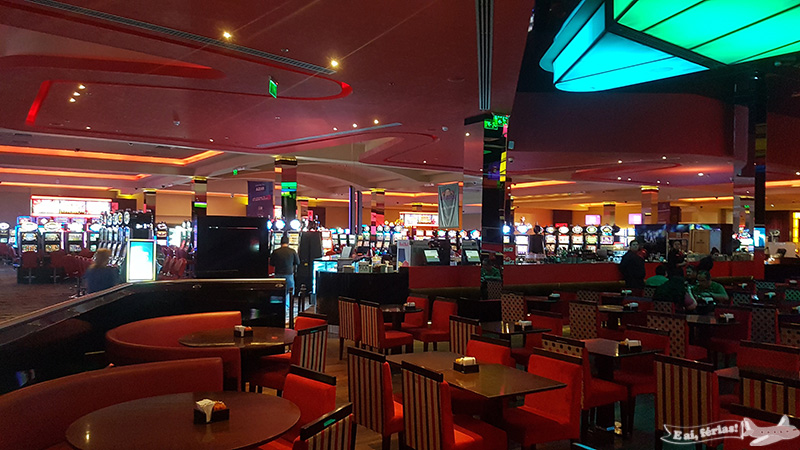

I’ve dedicated enough time walking casino floors to know that high limit tables possess a certain mystique, but they cease to be intimidating the moment you grasp how they actually work. When I discuss with players curious about stepping up from standard stakes, the questions almost always center on minimum bets, comps, etiquette, and whether the house edge changes. High limit tables are built for players who want bigger action, faster decisions, and a more private environment, but the games themselves obey the same mathematical principles. In the UK, you’ll find these exclusive areas in land-based venues from London to Manchester, and online platforms like read this article have adapted the concept brilliantly for digital play. My aim here is to take you through every practical aspect of high limit gaming so you can choose whether it fits your bankroll, your temperament, and your overall approach to casino entertainment.
Bankroll Management Designed for High Limit Sessions
Fund management at high stakes is categorically different from the typical advice I give to casual players. The core principle holds—never gamble with money you cannot spare to lose—but the implementation becomes more precise because the absolute numbers are greater and the psychological traps are amplified. I structure a high limit session with three different pools: the session bankroll that I am willing to put at risk tonight, a stop-loss figure that activates an automatic exit, and a win goal that prompts me to seriously consider cashing out profits. For a £200 minimum blackjack table, I might define a session bankroll of £10,000, a stop-loss of £6,000, and a win goal of £4,000. These numbers are subjective and should reflect your financial reality, not someone else’s. The critical discipline is honouring the stop-loss when it hits, because high limit tables can produce losing streaks that intensify faster than you predict, and pursuing losses at elevated stakes is the fastest route to a truly damaging outcome.
Session Planning: Timing, Pauses, and Cognitive Fatigue
I have learned through experience that high limit play creates a particular kind of mental fatigue that does not appear at lower stakes. Every decision bears outsized consequence, and sustaining focus for hours demands more cognitive energy than most players expect. My practical recommendation is to break a high limit session into 45-to-60-minute blocks divided by mandatory breaks of at least 15 minutes where you walk away from the table entirely. During those breaks, review your position relative to your stop-loss and win goal without making any adjustments—just observe and let the numbers sink in. Decision fatigue in blackjack leads to basic strategy errors that bleed edge, and in baccarat it can lead you toward the awful Tie bet with its 14.4% house edge. Online play at Cashbox Casino’s premium tables gives you the advantage of pausing without physical table pressure, but the discipline to actually take breaks must come from you, not from the software.
Unique Considerations for UK Players at High Limit Tables
The UK occupies a special position in the global high limit arena because of how the regulatory environment interacts with player protections and taxation. Unlike some jurisdictions where casino winnings are taxed, UK players retain every pound they win, which affects the effective return calculation significantly when you are operating at high limits. A £10,000 winning session is £10,000 in your pocket with no capital gains or gambling duty to deduct. The Gambling Commission’s licensing requirements also imply that any online platform offering high limit tables to UK residents, including Cashbox Casino, must segregate player funds from operational accounts, maintain transparent complaints procedures, and adhere to strict anti-money laundering protocols that include source-of-funds checks at elevated deposit thresholds. I mention this last point because high limit players depositing five-figure sums should expect and be prepared for requests to document the origin of those funds. This is not suspicion; it is a regulatory obligation that every compliant operator must meet, and being organised with bank statements or payslips in advance smooths the process considerably.
What Truly Defines a High Limit Table
First, let us clarify that no universal industry standard draws the line between regular and high limit tables. At most UK casinos, a blackjack table with a minimum bet of £25 or £50 remains standard, whereas high limit usually starts at £100 per hand and can climb to £500 or £1,000 minimums without anyone blinking. Roulette high limit tables frequently carry £50 minimums on outside bets and significantly higher straight-up chip requirements. What makes this classification important is the blend of wagering thresholds and the manner in which the operator treats the players sitting there. check this out You can usually find these tables cordoned off in a dedicated salon privé on a physical casino floor, run by more experienced dealers and pit bosses who keep the game moving at a pace that acknowledges the money in play. On the internet, the definition changes to table limits that go beyond the standard lobbies, with VIP-branded live dealer studios where maximum bets can achieve five or six figures for those who qualify.
Betting Limits and Their Practical Implications
When I look at a high limit table’s minimum and maximum spread, I’m really assessing how much flexibility it gives a player’s strategy. A £100 minimum with a £5,000 maximum offers a 1:50 spread, which is workable for conservative progression betting but potentially tight for aggressive negative progression like a Martingale after a few consecutive losses. A £500 minimum with a £20,000 ceiling provides you a 1:40 ratio, and at that level you need to be utterly comfortable with seven consecutive losing rounds totaling over £63,000 if you double each time. The practical implication is that high limit play calls for a session bankroll substantially greater than what you might reserve for an evening at £10 tables. I always suggest that anyone moving up brings at least fifty times the table minimum for a single session, so on a £200 blackjack table you would require £10,000 set aside solely for that game. This doesn’t concern pessimism; it’s about avoiding emotional decisions when variance works against you.
The Distinction Between VIP and Public High Limit Areas
There is a significant distinction I want to highlight between tables that are publicly available with elevated limits and those reserved for by-invitation VIP programmes. Public high limit tables are open to any player who fulfills the minimum buy-in, and you will discover these in most larger UK casinos as well as on the exclusive pages of sites like Cashbox Casino. The VIP-only tables function differently: they are often hosted in private rooms with dedicated account managers, flexible limit agreements, and comp structures arranged individually. In an online context, this translates to custom table arrangements where a player might ask for a specific dealer, game variant, or maximum bet that exceeds published caps. If you are playing at a level where this becomes pertinent, the operator’s VIP team will typically contact proactively rather than making you chase the access. For the bulk of high limit enthusiasts, the publicly available premium tables offer all the premium action they need without the relationship management that true whale status entails.
Conduct and Manners at High Limit Tables
There is an unspoken code at high limit tables that I think is important learning before you find yourself in an awkward situation. The first rule is that the pace of the game is set by the players with the largest action, and placing yourself into a high limit table with the minimum buy-in while repeatedly slowing down decisions will not ingratiate you to the dealer or the other seats. Control your chips clearly, signal your intentions decisively, and do not touch your bet once the hand or spin has started. In blackjack, verbal commands are recommended at high stakes because they are unambiguous and recorded by surveillance; a calm “stand” or “double” prevents any dispute about hand signals. Tipping practices at high limit tables tend to be more formal—players placing £500 bets will often place a separate bet for the dealer at regular intervals rather than tossing chips after winning hands. Online high limit tables strip away most of these interpersonal dynamics, but in live dealer formats you still engage through the chat function, and preserving courteous communication with the dealer reflects well on you as a player.
The way Comps and Rewards Grow with High Limit Play
One of the clearest differences I see between standard and high limit gaming is the way the operator assesses your action through comps, cashback, and loyalty points. On a £10 blackjack table delivering perhaps 80 hands per hour, your total wagering volume amounts to £800, which yields a modest trickle of points in most programmes. Switch to a £500 table with the same pace, and you are wagering £40,000 per hour through the system, which attracts attention. In UK land-based casinos, this converts into dedicated hosts, complimentary dining and accommodation, event invitations, and sometimes direct loss-rebate agreements that return a percentage of negative sessions. In the online space, Cashbox Casino and similar platforms typically demonstrate this through tiered loyalty schemes where high limit play moves you into upper VIP echelons, granting faster withdrawal processing, higher deposit limits, personalised bonus offers, and tangible gifts. I always recommend players to actively ask about the comp structure before committing significant volume, because unclaimed rewards are essentially forgoing money on the table that the house has already included into your theoretical value.
Comprehending the Comp Math Without Getting Lost in It
There is a clear formula I use to calculate what my play is worth in comps so that I can assess whether the rewards justify the expected loss. The casino computes your theoretical loss by multiplying your average bet, hands per hour, hours played, and house edge. On that £500 blackjack example with a 0.5% edge over four hours, your theoretical loss is £500 × 80 hands × 4 hours × 0.005 = £800. In a typical UK loyalty programme, you might get comps worth 20% to 40% of that theoretical figure, equating to somewhere between £160 and £320 in tangible value. This could be in the form of bonus credit, dining vouchers, or tournament entries. What I want you to understand is that comps do not turn a negative-expectation game into a profitable one; they merely soften the cost of entertainment. If the comp percentage exceeds 40%, you are likely encountering a programme designed to aggressively acquire or retain high-volume players, and those terms rarely last indefinitely without adjustment.
Which Casino Games Provide the Top High Limit Experience
Few casino games translates equally well to high stakes, and I have found that the games where skill influences the outcome tend to attract the most serious high limit action. Blackjack leads of that list, particularly in its traditional shoe-dealt format where a player can employ basic strategy and, in some jurisdictions, legally advantage-play techniques without crossing into card counting territory that would attract heat. Baccarat is the second pillar of high limit rooms, and in the UK it often follows the punto banco variant with its simple player-versus-banker dynamic that requires no decisions beyond the initial wager. Roulette holds its own in the high limit sphere, especially European single-zero wheels where the house edge is a clean 2.70%, making large outside bets more sustainable over time. For poker-based games, Casino Hold’em and Three Card Poker appear frequently at elevated limits, though the house edge on these tends to be higher than on blackjack, so I approach them more cautiously with a recreational mindset.
High Stakes Blackjack: What Alters and What Remains Unchanged
I must be direct about this: the basic strategy chart that indicates when to hit, stand, split, or double does not change at all when zeros are added to your bet. A hard 16 against a dealer’s 10 is still a surrender if available, or a hit if surrender isn’t offered, whether you have £10 or £10,000 on the felt. What does shift is the poise required to perform those decisions correctly under financial pressure. High limit blackjack tables in the UK usually use six or eight decks dealt from a shoe, with the dealer standing on all 17s, and surrender often available, which provides a house edge around 0.45% to 0.55% with perfect basic strategy. I have also seen that high limit tables are more likely to offer even-money payouts on blackjack if the dealer shows an ace, but you should reject that insurance-like shortcut every single time because it diminishes your long-term return. Pace matters too: a full high limit table might play 60 to 80 hands per hour, meaning your theoretical loss per hour on a £200 average bet sits around £90 to £110, a number worth absorbing before you sit down.
Baccarat: The Quiet Powerhouse of High Limit Rooms
I have always found baccarat to be the game that best embodies the rhythm of high limit play because it strips away nearly all decision-making and lets the cards dictate the outcome. You make a wager on Player, Banker, or Tie, and the dealer handles everything else. The Banker bet carries a house edge of just 1.06% after accounting for the 5% commission on winning Banker hands, making it one of the most favourable wagers in the entire casino. High limit baccarat tables in UK venues and on platforms like Cashbox Casino often feature the squeeze ritual in live dealer formats, where the dealer slowly reveals cards to build tension, adding a ceremonial layer that many high-stakes players genuinely enjoy. Minimums in dedicated baccarat rooms can reach £1,000 per hand, and the game’s relatively low volatility compared to roulette means a session can sustain itself longer without the wild swings that drain a bankroll prematurely. If I were advising a player transitioning to high limits for the first time, baccarat would be my top recommendation simply because the house edge is low and the pace feels refined rather than frantic.
Roulette and the Single-Zero Advantage
I cannot overstate enough how crucial it is to look for European roulette instead of its American counterpart when you are dedicating serious money to the wheel. The single zero on a European layout yields a 2.70% house edge, while the double-zero American wheel multiplies that to 5.26%, an vast gulf when you are placing bets of £100 or more per spin. High limit roulette tables in the UK are nearly always European, and many online premium studios now include immersive camera angles that track the ball in slow motion. I approach high limit roulette with a focus on outside bets—red/black, odd/even, high/low, dozens, and columns—because they provide the most spins for your session bankroll and lower the variance per decision. A £500 even-money outside bet has a 48.6% chance of winning on a single-zero wheel, and while the house still holds its mathematical edge, you are not wasting capital at the rate that inside straight-up bets would cause. For those who appreciate the thrill of number bets, I recommend keeping them as a small fraction of your total action instead of the core of your strategy.
Online High Limit Tables Versus Land-Based Rooms
The virtual transformation of high limit gaming has created a scenario where you can access £500-minimum live dealer tables from your living room, and I feel this has fundamentally changed who plays at these stakes. Land-based high limit rooms in London venues like The Ritz Club or Les Ambassadeurs offer an ambiance that cannot be replicated digitally—the room itself, the personal service, the tangible chips, and the social dimension all add to an experience that justifies the journey for many players. Online platforms, however, offer advantages that are equally real: a wider selection of table limits at any given hour, the ability to play across multiple operators to compare comp offers, and the absence of travel costs that can eat into a session bankroll. Cashbox Casino’s high limit vertical includes live dealers streamed from professional studios, often with dedicated tables where the pace can be modified to suit a single high-volume player rather than a full table of mixed stakes. The key difference I see is that online high limit play requires even stronger personal discipline because there is no floor manager or fellow player to provide a social check on impulsive actions.
Technical and Fairness in Digital High Limit Gaming
When I encounter scepticism about the fairness of online high limit tables, I turn to the regulatory framework that governs UK-licensed https://bleacherreport.com/articles/10071788-masters-2023-payout-prize-money-and-purse-breakdown-for-top-golfers operators. The Gambling Commission mandates that all game outcomes be determined by certified random number generators or, in the case of live dealer studios, by physical equipment subject to regular audit and card-deck rotation protocols. For live blackjack, the shoes are shuffled on camera, and the dealing procedures follow the same standards you would expect in a brick-and-mortar casino. The return-to-player percentages for each game variant are published and audited, and I encourage anyone stepping into online high limit play to examine these documents on the operator’s site before depositing. On the technology side, the streaming quality at premium tables is now sufficiently advanced that multiple camera angles capture every detail, and latency is low enough for real-time decision-making without frustrating delays. The experience has developed to a point where the trust question is determined by regulation rather than reputation alone.
Is It Time for High Limit Tables? A Sensible Decision Framework
I have guided enough players consider this decision to distill it into a few questions that break through the excitement and concentrate on sustainability. First, does your current bankroll readily absorb a losing session at the target minimum without affecting your lifestyle or obligations? If the answer needs mental gymnastics to justify, you are not ready. Second, can you carry out optimal strategy flawlessly under pressure, particularly in blackjack where a single error costs real expected value? If you are still consulting a chart, practise at lower stakes until the decisions become automatic. Third, are you moving up because the limits thrill you or because you sincerely want the enhanced experience, privacy, and comp structure that high limit tables offer? Motivation matters because the former causes overbetting. Finally, have you confirmed that the specific high limit tables you are targeting—whether at a London club or on the Cashbox Casino platform—carry the favorable rule sets and house edges that make extended play viable? If you can answer yes honestly to all four, then high limit play becomes a legitimate next step rather than an aspirational leap. Start at the lower end of the high limit spectrum, track your results meticulously, and let the data guide whether you increase, hold, or step back. The tables will always be there, and the best high limit players I know are the ones who treat the stakes with respect rather than bravado.